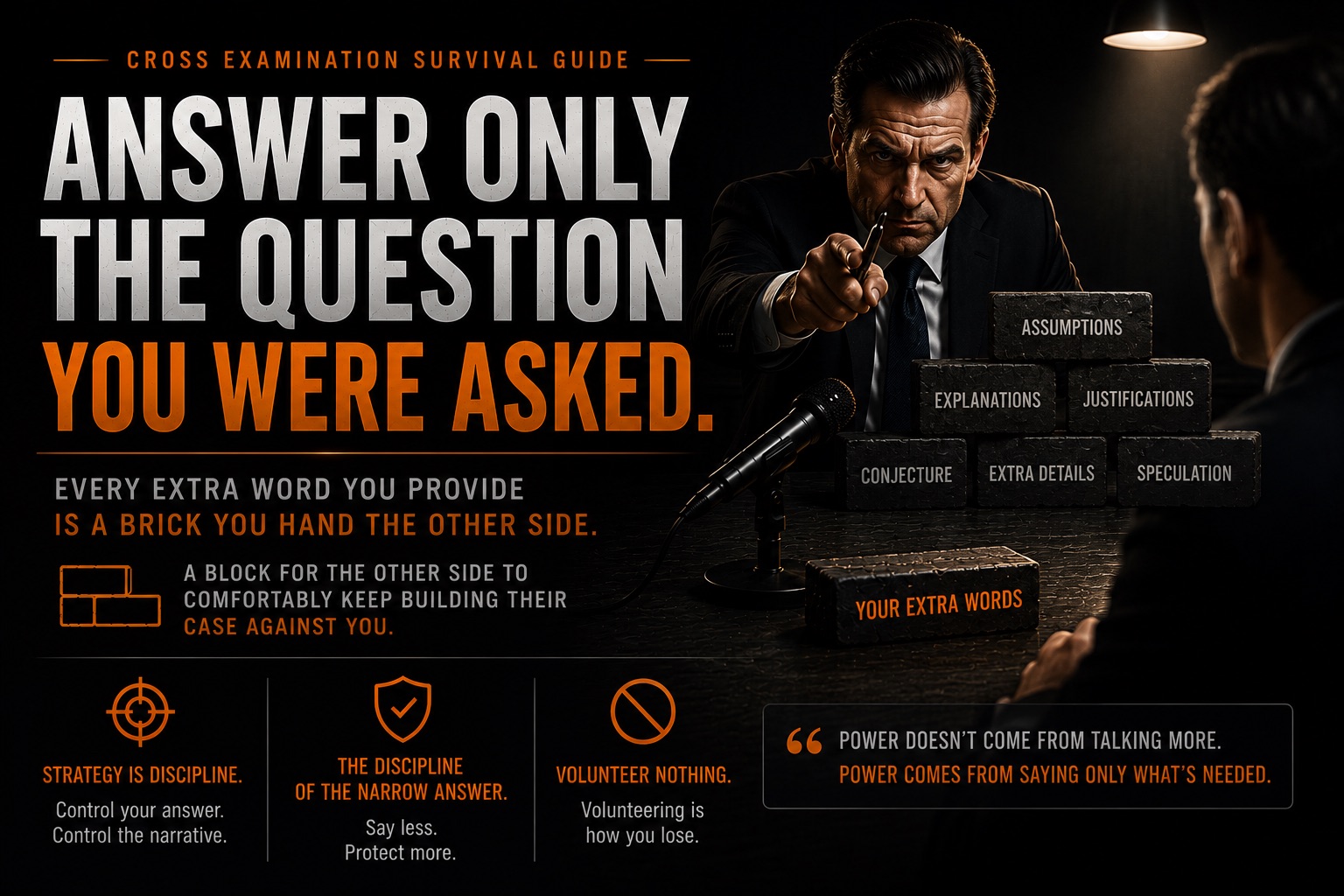
On cross-examination, the questions are short and closed for a reason. The examiner is building a wall one brick at a time — and every extra word you volunteer is a brick you hand them for free.
The narrow answer is your armor
A yes/no question gets a yes/no answer. If it can be answered in a word, answer it in a word. This feels unnatural — in normal conversation, one-word answers are rude. On cross, they're survival. The examiner controls the questions; the only thing you control is how little you give.
Volunteering is how you lose
“Were you at the office on the 14th?” The answer is “Yes.” Not: “Yes, but only briefly, because I had to grab something before the audit meeting.” In one breath you just introduced the audit meeting, the “something,” and the timing — three new threads for them to pull, none of which they asked about.
You are not there to explain yourself
The instinct to justify, contextualize, and soften is powerful, and it's exactly what a good examiner is counting on. Explanation is theirs to invite — and on cross, they usually won't, because a bare “yes” is more useful to them than your story. If you feel the urge to add “because…,” that's the moment to stop.
When you must qualify, qualify tightly
Sometimes a flat yes/no genuinely misleads. Then you can say, “I can't answer that yes or no” — but don't wander into a monologue. One sentence, then stop and wait for the next question.
The most disciplined witness sounds almost boring. That's the point.
Reps build the reflex
Knowing to keep it short and actually doing it while someone hammers you with rapid, leading questions are different skills. The urge to fill, to explain, to be liked — you only train it out by facing it. That's what The Third Degree is for.
Practice the pressure.
Sit across from an AI examiner that won't let you off the hook — and learn to hold the line for real.
Launch the Web App