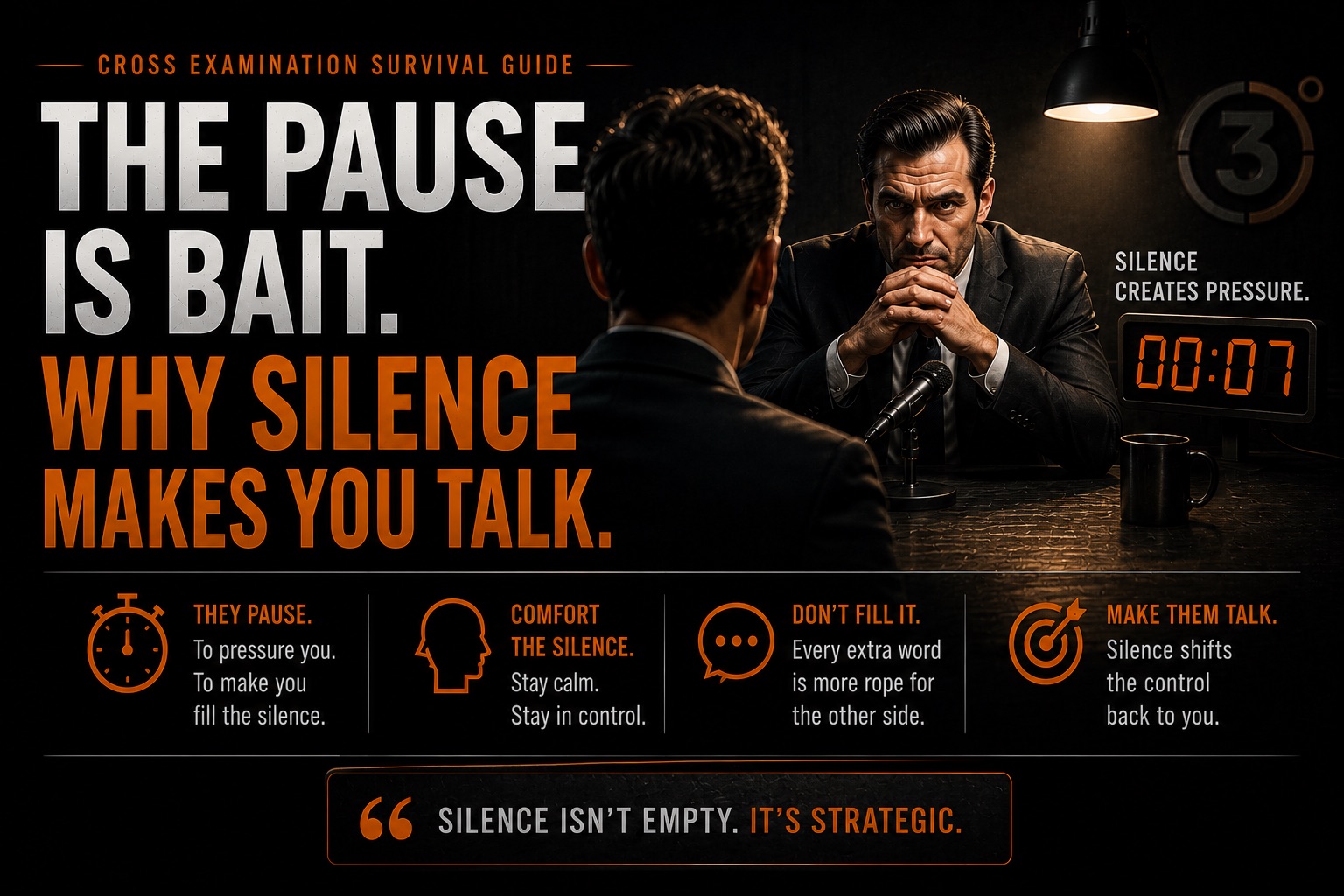
You answer the question. The room goes quiet. The other person says nothing — just looks at you. Three seconds feels like thirty. And then you do the exact thing they were waiting for: you keep talking.
Silence is a tool, and it works on almost everyone
Humans are wired to close conversational gaps. Interrogators, negotiators, and skilled interviewers know it and weaponize it: they stop talking so you will, and the words you add to fill the void are almost always words that hurt you — a detail you didn't need to give, a walk-back, an over-explanation.
Your answer was already complete
When you've answered the question, you're done. The silence that follows is not your problem to solve. Let it sit there. If they want more, they'll ask — and then you answer that question, narrowly, and stop again.
Get comfortable being uncomfortable
The discomfort is the mechanism. The entire skill is tolerating it: answer, close your mouth, and hold the pause without flinching or elaborating. It feels like losing. It's the opposite.
Spot the bait
Watch for the slow nod and nothing else, or a soft “…and?” or “go on.” That's the lure. You don't have to take it. “That's what happened” — or simply calm silence — is a complete response.
The person who can sit in a silence they didn't create is very hard to interrogate.
Train the reflex
Reading about silence and holding it while someone stares you down are different things. You build the tolerance by rehearsing it — which is what The Third Degree is for.
Practice the pressure.
Sit across from an AI examiner that won't let you off the hook — and learn to hold the line for real.
Launch the Web App